Interactive Bedtime Stories for Kids: 5 Creative Ideas Parents Can Try
Practical tips to make bedtime stories more interactive for kids. Personalize plots, invite participation, use props and sound effects, and turn drawings into animated tales with Pixley.
 Pixley Team
5 Interactive Bedtime Story Ideas for Kids That Make Storytime Magical
Bedtime stories are one of the simplest ways to help kids slow down, feel connected, and end the day with imagination. But storytime can become even more powerful when your child gets to help create the story instead of only listening to it.
That is where interactive bedtime stories come in. Your child can choose what happens next, name the hero, make sound effects, act out a scene, or turn one of their own drawings into a personalized animated story with Pixley.
The best part? You do not need to be an amazing storyteller. A few small prompts can turn a normal bedtime routine into a creative, calming adventure your child looks forward to every night.
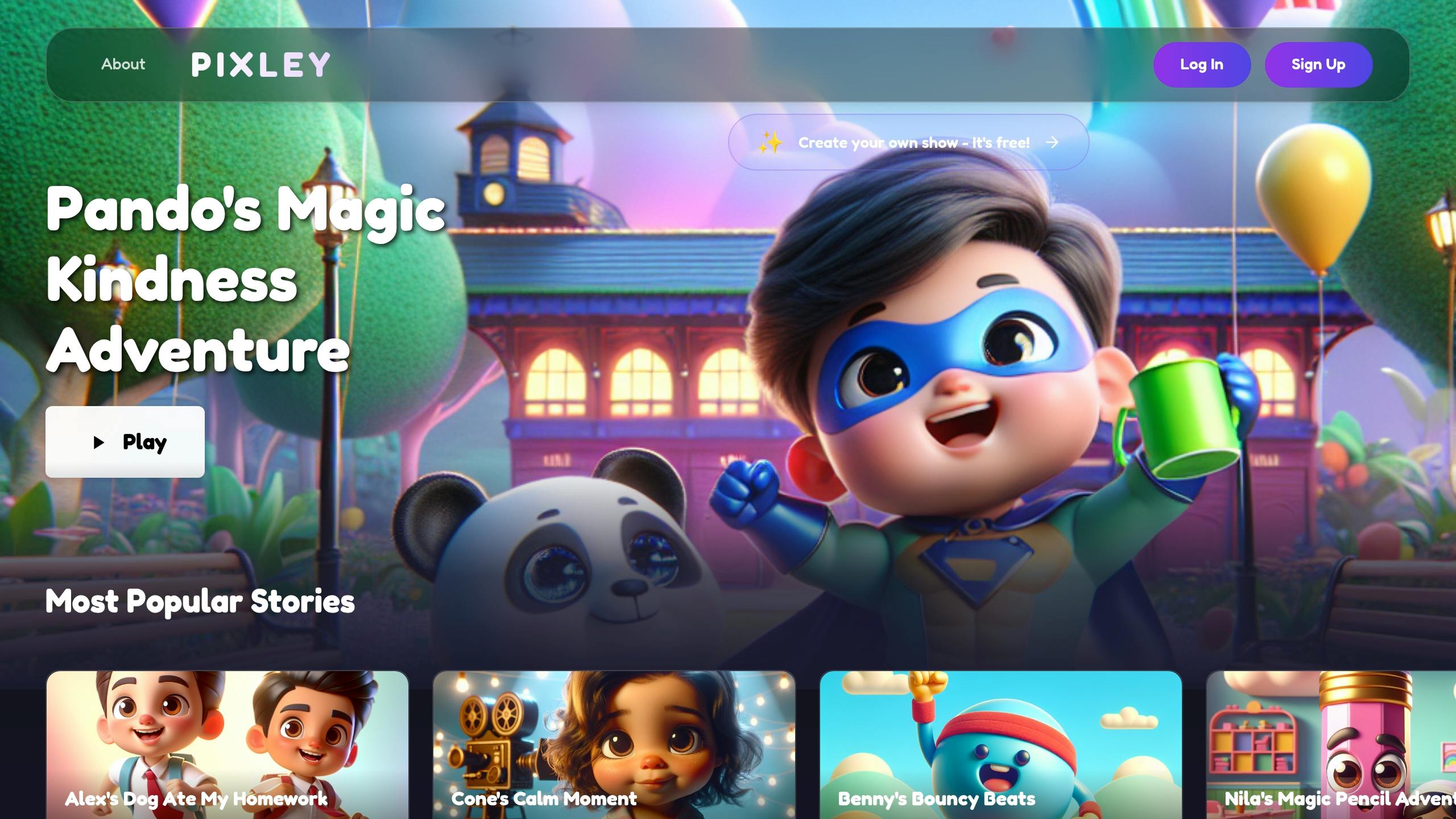
Example of a Pixley-style personalized animated story where a child's ideas become the adventure.
Quick Takeaways
- Interactive bedtime stories help kids become part of the story, not just the audience.
- Simple choices like "Should the dragon fly or hide?" can make bedtime more engaging.
- Drawings, stuffed animals, sound effects, and familiar places make stories feel personal.
- Pixley can help turn a child's drawings and ideas into personalized animated cartoons.
- The goal is not a perfect story. The goal is connection, imagination, and a calmer bedtime routine.
What Is an Interactive Bedtime Story?
An interactive bedtime story is a story your child helps shape.
Instead of reading every word while your child quietly listens, you invite them into the story. They might choose the setting, decide what the character does next, make the sound of the wind, or answer a question like, "How do you think the little bear feels?"
That tiny shift changes the whole experience. Storytime becomes a conversation. Your child gets to practice imagination, language, emotional awareness, and decision-making in a way that still feels playful.
Interactive storytelling can be especially helpful at bedtime because it gives kids a gentle way to process the day. A story about a nervous moon bear starting school can help a child talk about their own nerves. A story about a dragon learning to share can make a real-life lesson feel less like a lecture.
Why Interactive Bedtime Stories Work So Well
Kids love stories because stories make big feelings easier to understand. When a character feels scared, tries again, apologizes, or asks for help, children can explore those emotions from a safe distance.
Interactive storytelling adds one more layer: ownership.
When your child chooses the path, names the sidekick, or creates the hero, they become emotionally invested. They are not just waiting for the ending. They are helping build it.
A research-backed reading method called dialogic reading uses a similar idea: adults ask questions, encourage children to respond, and help them connect the story to their own experiences. You can bring that same approach into bedtime with simple prompts like:
- "What do you think happens next?"
- "How would you feel if you were there?"
- "What should the character try now?"
- "Does this remind you of anything from today?"
Reading and storytelling also expose children to new words. The often-cited "1.4 million word gap" estimate comes from research on how much language exposure children may receive when they are regularly read to at home. The number is a reminder that small nightly routines can add up over time.
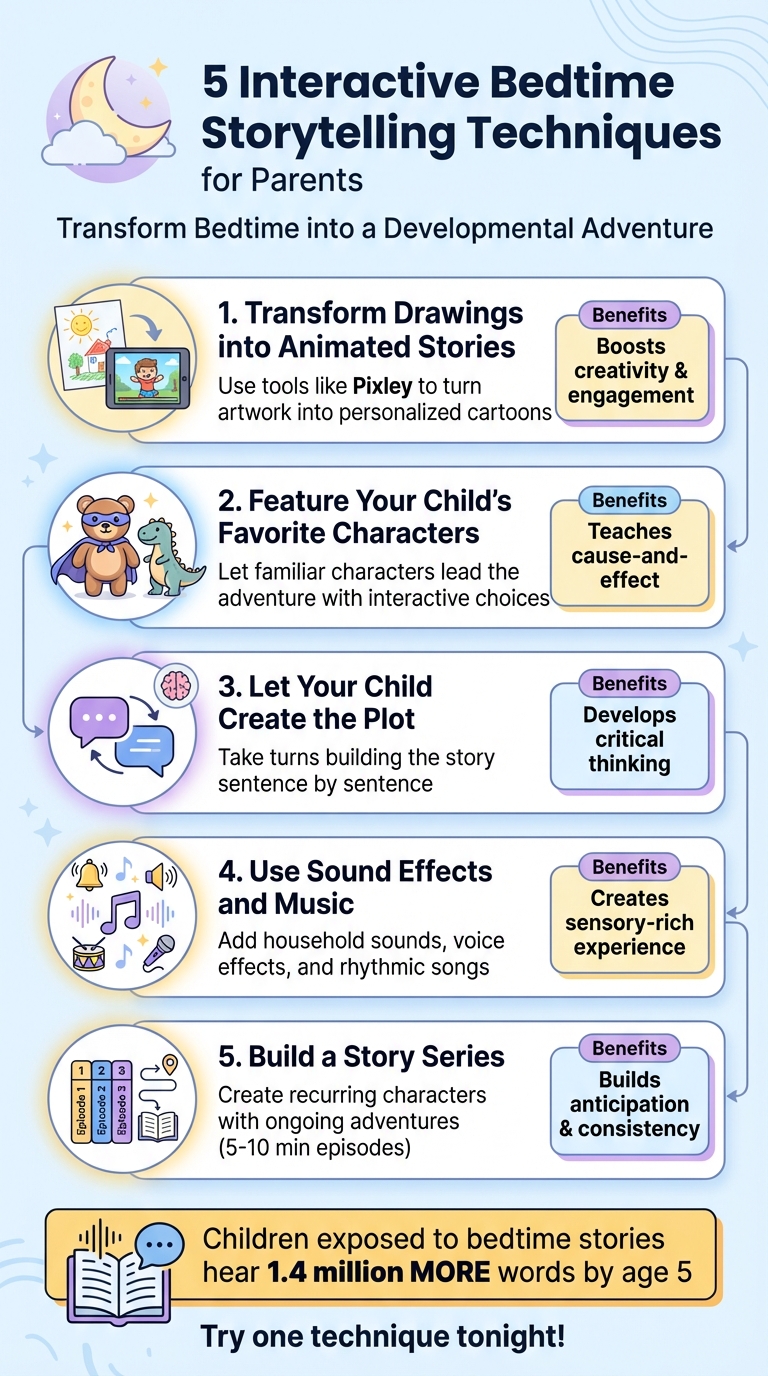
Five simple ways to make bedtime stories more interactive. Source note: the 1.4 million-word figure shown in the infographic comes from Ohio State University research summarized by the Association of American Universities.
1. Make Your Child the Main Character
The fastest way to make a bedtime story more exciting is to put your child inside it.
Instead of starting with:
"Once upon a time, there was a brave explorer."
Try:
"Once upon a time, Maya found a tiny glowing door under her pillow."
Now the story instantly feels personal. Your child is not just hearing about an adventure. They are in the adventure.
You can make the story even more meaningful by adding details from their real life:
- Their favorite stuffed animal
- Their pet
- Their bedroom
- Their school
- A park they love
- A favorite snack
- A real challenge they are working through, like sharing, patience, or trying something new
For younger kids, keep the story close to home. A lost teddy bear, a magical bathtub boat, or a sleepy dinosaur in the closet is enough. For older kids, add bigger choices, mysteries, and surprises.
Try This Tonight
Start with this sentence:
"Tonight, you are the hero. You wake up and find a tiny map glowing on your blanket. Where does it lead?"
Let your child answer, then build the next sentence from their idea.
2. Turn Your Child's Drawings Into a Story
Some of the best bedtime characters start as doodles.
A purple dinosaur. A rainbow cat. A rocket ship with eyes. A superhero potato. Kids often create characters before they even know what the story is about.
That is a perfect starting point.
Ask your child to draw one character before bed. Then ask a few questions:
- "What is their name?"
- "What do they want?"
- "What are they afraid of?"
- "Who helps them?"
- "What do they learn by the end?"
Those answers can become a full bedtime story.
This is also where Pixley fits naturally. Pixley helps families turn kids' drawings and ideas into personalized animated cartoons. Parents can guide the theme, while kids get the magic of seeing their own imagination come to life.
Instead of passive screen time, the child becomes the creator. Their drawing becomes the character. Their idea becomes the episode. And the parent can shape the story around a meaningful lesson like kindness, courage, confidence, early math, reading, or curiosity.
Try This Tonight
Ask your child to draw a character and finish these three lines:
"My character is named ___."
"They live in ___."
"Tonight, they need help with ___."
That is enough to start a personalized bedtime adventure.
3. Give Your Child Two Choices
Open-ended questions can be hard for kids, especially at bedtime when everyone is tired.
Instead of asking:
"What should happen now?"
Give two playful options:
"Should the fox follow the sparkly footprints into the forest, or knock on the tiny blue door?"
This keeps the story moving while still giving your child control.
Two-choice prompts work because they are simple. Your child does not have to invent the whole plot from scratch. They only have to choose a direction. Then you can take their answer and continue the story.
You can use two-choice prompts for action, emotion, and problem-solving:
- "Should the dragon fly over the mountain or crawl through the secret tunnel?"
- "Should the bunny tell the truth or hide the broken crown?"
- "Should the robot ask for help or try one more time?"
- "Should the princess use kindness or magic?"
These small decisions help children think through cause and effect. They also make the story feel like a game without making bedtime too chaotic.
Try This Tonight
Use this simple structure:
"The character has two choices. Should they ___ or ___?"
Whatever your child chooses becomes the next scene.
4. Add Voices, Props, and Sound Effects
You do not need costumes or a perfect narrator voice to make storytime fun.
A blanket can become a cave. A flashlight can become moonlight. A pillow can become a mountain. A stuffed animal can become the brave sidekick who always misunderstands directions.
Sound effects are especially helpful because they give your child something to do inside the story.
Try simple sounds like:
- Tapping the bed for footsteps
- Whispering for the wind
- Clapping softly for thunder
- Squeaking for a tiny mouse
- Roaring for a dragon
- Humming for magic
- Patting your legs for a horse gallop
You can also assign your child one recurring sound. Every time the magic door opens, they make the sparkle sound. Every time the sleepy robot powers down, they make the robot noise.
This keeps kids engaged while still letting the story stay calm enough for bedtime.
Try This Tonight
Pick one sound your child controls:
"Every time the star appears, you make the magic sound."
Then bring the star back a few times throughout the story.
5. Build a Bedtime Story Series
Some of the most memorable bedtime stories do not end after one night.
A story series gives your child something familiar to return to. The same character can go on a new adventure each night, learn a new lesson, and slowly become part of your family's bedtime routine.
Your recurring character could be:
- A moon bear who delivers lost dreams
- A turtle who finds tiny doors under pillows
- A flying panda who helps kids solve problems
- A robot who learns one new feeling every night
- A child's own drawing that comes back in new adventures
Each episode can focus on a small theme:
- Sharing
- Trying again
- Making friends
- Handling frustration
- Being brave in the dark
- Learning letters or numbers
- Exploring dinosaurs, oceans, planets, or animals
Pixley can make this even more exciting because your child's recurring character can become part of a personalized animated story. The character stays familiar, but every episode can introduce a new adventure or lesson.
Try This Tonight
End with a tiny cliffhanger:
"And just as Luna the moon bear curled up to sleep, she noticed one more glowing star under her pillow…"
Then ask:
"What do you think happens tomorrow?"
Now your child has a reason to look forward to the next bedtime story.
A Simple 5-Minute Bedtime Story Formula
When you are too tired to invent a full story, use this four-part formula.
1. Pick a Character
Who is the story about?
Example: "A tiny turtle named Tiko."
2. Pick a Place
Where does the story happen?
Example: "Inside a pillow fort that secretly turns into a spaceship."
3. Pick a Problem
What goes wrong?
Example: "Tiko wants to fly to the moon, but he is afraid to ask for help."
4. Pick a Lesson
What does the character learn?
Example: "Asking for help can be brave."
Put it together:
"A tiny turtle named Tiko finds a spaceship inside a pillow fort. He wants to fly to the moon, but the spaceship gets stuck behind a cloud. Tiko learns that asking for help can be brave."
That is enough for a complete bedtime story.
How Pixley Makes Interactive Storytelling Easier
Some nights, you have the energy to make up a whole adventure. Other nights, you need a little help.
Pixley is built for those moments.
Pixley helps kids turn their drawings, characters, and ideas into personalized animated cartoons. Parents can guide the story's theme, while kids get to see their imagination become the show.
That makes Pixley useful for families who want screen time to feel more creative and intentional. Instead of only watching a random video, kids can help create a story around their own character.
A child might draw a brave panda. A parent might choose a theme like kindness. Pixley can help turn that idea into a story where the panda learns to include a new friend, share a favorite toy, or try again after making a mistake.
It is still magical for the child. But it is also guided by the parent.
Create your child's first story with Pixley
Watch: More Storytime Inspiration for Parents
For more ideas on making storytime fun and interactive, watch this short storytime tips video:
Final Thoughts
Interactive bedtime stories do not need to be complicated.
You can start with one question, one drawing, one silly voice, or one choice between two paths. What matters most is that your child feels included.
Tonight, try asking, "What happens next?" Let your child name the hero. Add one sound effect. Turn their drawing into the main character. End with a tiny cliffhanger.
A few minutes of shared imagination can turn bedtime into one of the best parts of the day.
FAQs
What is an interactive bedtime story?
An interactive bedtime story is a story where the child helps shape what happens. They might choose the character, decide where the story goes next, make sound effects, answer questions, or act out part of the scene.
Why are interactive bedtime stories good for kids?
Interactive bedtime stories can help kids practice imagination, listening, language, decision-making, and emotional awareness. They also make bedtime feel more personal and connected.
How long should a bedtime story be?
For younger kids, 5 to 10 minutes is usually enough. Older kids may enjoy 15 to 20 minutes. The best length is one that keeps bedtime calm and consistent.
What if my child makes the story too silly?
Give them two choices instead of leaving the story completely open-ended. For example, ask, "Should the dragon fly to the moon or hide in the castle?" This lets your child participate while keeping the story focused.
What if my child is shy and does not want to participate?
Start small. Let them point to an option, name a character, choose a color, or make one sound effect. They do not need to tell a whole story right away.
Can Pixley help with bedtime stories?
Yes. Pixley helps families turn kids' drawings and ideas into personalized animated cartoons. Parents can guide the story's theme, while kids get to see their own characters and imagination come to life.
Is Pixley safe for kids?
Pixley is designed for family-friendly, parent-guided storytelling. It focuses on creative, ad-free screen time where parents help guide what each story teaches.
Keep Reading
- Teaching Visual Metaphors With Cartoons: A Parent and Teacher Guide
Learn how to teach visual metaphors to kids using cartoons, comic panels, drawings, and personalized stories. Help children connect images to feelings and ideas in simple steps.
- How Stories Build Emotional Intelligence in Kids
Learn how stories build emotional intelligence in kids by helping them name feelings, practice empathy, and build calm responses through reading, role-play, and Pixley.
- Age-Appropriate Digital Stories for Kids: Parent Guide
Learn how to choose age-appropriate digital stories for kids, with tips for story length, pacing, safety, co-viewing, and creative screen time.
- All parenting & screen-time guides →